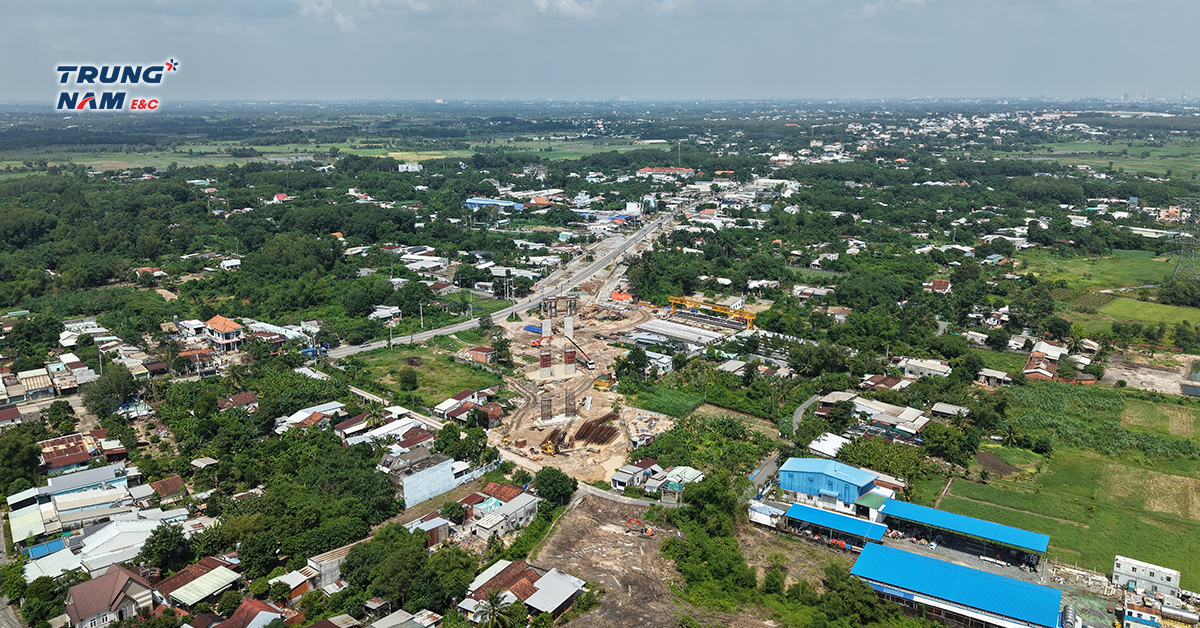
As of the end of September 2026, at the Route 8 Overpass project, construction work on bored piles, abutment foundations, and the continuous casting of Super-T girder beams is underway, accelerating construction fronts across the entire handed-over site area. At locations where traffic organization conditions are still obstructed, the project is coordinating with competent authorities to finalize the traffic diversion plan, creating favorable conditions for deploying subsequent items.
Deployment of Construction Across the Entire Handed-Over Site Area
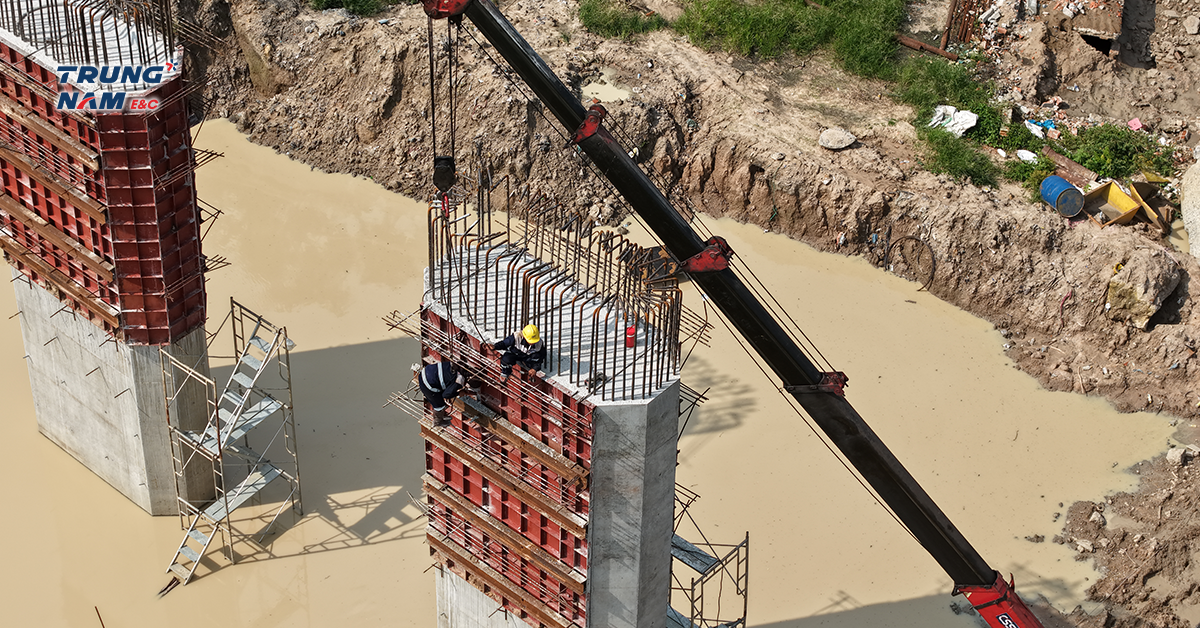
As of the update time, the project has received 5 out of 7 pier and abutment locations. The entire handed-over site area is being organized for construction, with fronts deployed according to the rolling method. Organizing construction directly on the site area that meets the conditions helps the contractor proactively allocate human resources, machinery, and equipment, while limiting waiting time between construction stages. At the construction site, items are implemented simultaneously in sequence: from bored pile construction for pile head treatment, pier and abutment foundation construction, to preparing the superstructure structure. This organizational method aims to maintain continuity between construction lines and allow subsequent items to be deployed as soon as technical conditions are met.
Hạng mục Khối lượng Tỉ lệ
Pier & Abutment Site 5/7 locations 71.4%
D1200 Bored Piles 37/57 piles 65%
Pier / Abutment Foundation 4/7 locations 57%
Super-T Girders 8/44 beams 18.2%
Pier T5 and Abutment M2 Traffic diversion plan under preparation
Bored piles are one of the important items during the substructure construction phase of the Route 8 Overpass. By September 2026, the contractor has completed 37/57 D1200 bored piles, equivalent to 65% of the planned total. Construction fronts continue to be organized by foundation location, combining drilling equipment, slurry treatment systems, and pile quality control processes. After completing the drilling and hole-making, construction proceeds according to technical steps including:
– Inspecting and treating the borehole;
– Lowering the steel cage;
– Pouring pile concrete;
– Inspecting pile quality according to design requirements;
– Breaking pile heads and deploying foundation structures.
The completion of 37/57 piles creates a premise for construction fronts to transition to the foundation and superstructure stages at qualified locations.
Completion of 4/7 Pier and Abutment Foundation Locations
Along with the progress of bored piles, pier and abutment foundation construction is also being implemented in parallel. Currently, 4/7 pier and abutment foundation locations have been completed, equivalent to about 57% of the foundation locations. After completing related operations on the piles, construction fronts proceed with: breaking pile heads, inspecting reinforcement construction, erecting formwork, pouring foundation cap concrete, and deploying pier bodies and abutments. Simultaneously executing the foundation and preparing the superstructure helps shorten the transition time between construction phases.
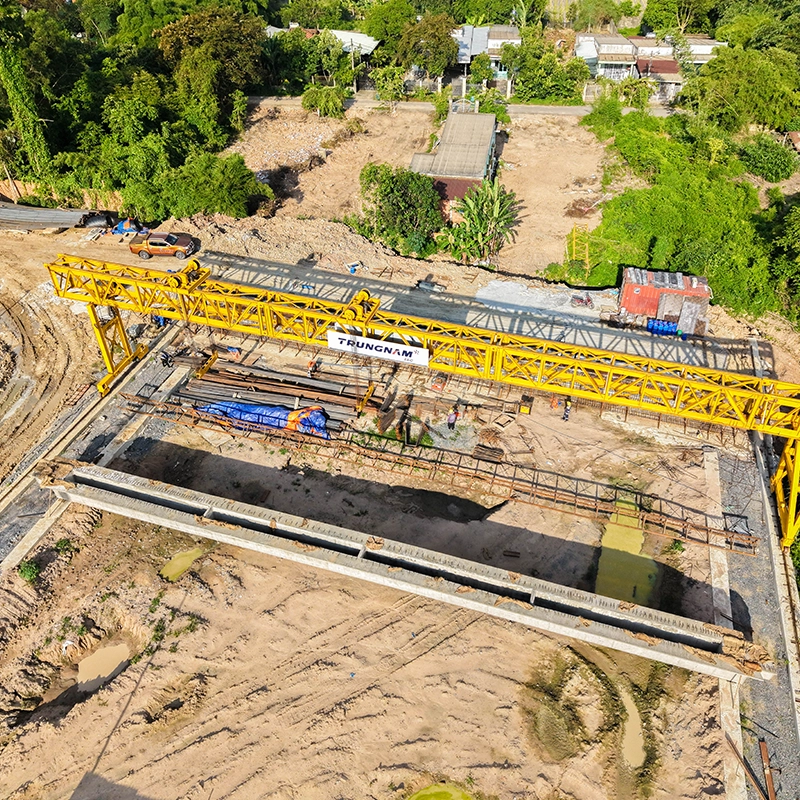
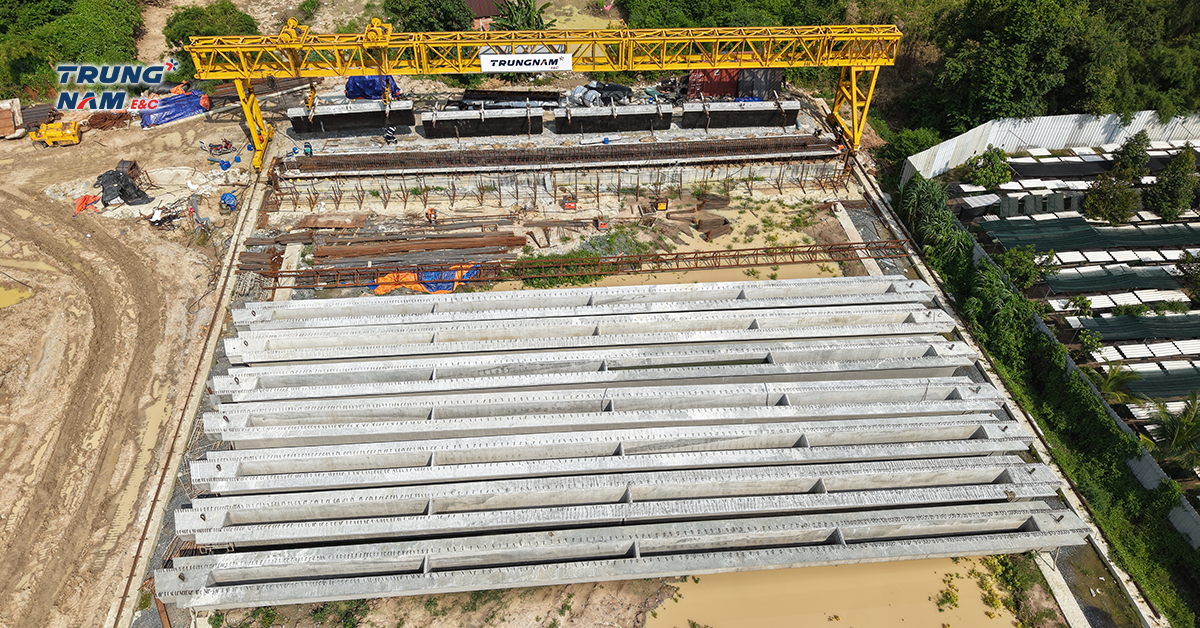
In parallel, accelerating the production of Super-T girders is being deployed at the project’s casting yard. As of the update time, 8/44 Super-T beams have been successfully cast, equivalent to about 18.2% of the total beams. According to the current production organization plan, the production line maintains a rhythm of about 3 days/beam. Proactively producing beams concurrently with substructure construction helps create a connection between the two production lines: substructure construction at the site and span structure production at the casting yard. According to the current plan, casting for all 44 Super-T beams is scheduled to be completed on January 20, 2027, ready to serve erection work once substructure and site conditions are met.
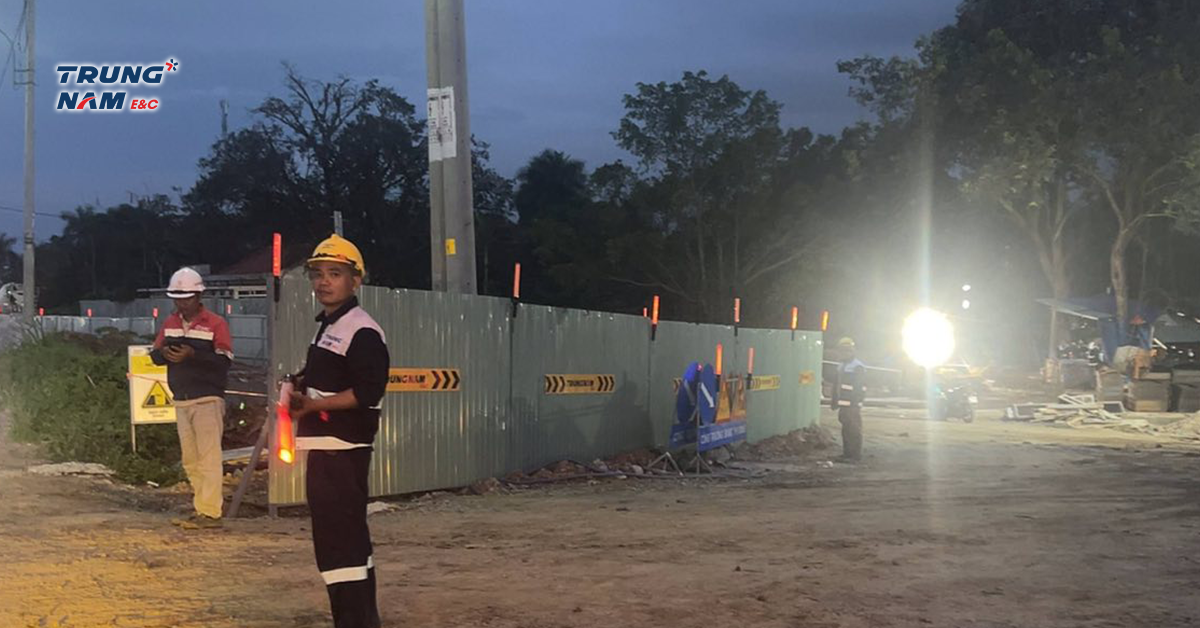
One of the tasks that needs continued handling in the upcoming period is the construction conditions at Pier T5 and Abutment M2, which directly relate to existing traffic scope. Therefore, bringing machinery and equipment into construction must be based on a traffic organization plan approved by competent authorities. The project executive board is coordinating with relevant parties to finalize the diversion plan, ensuring requirements regarding:
– Traffic safety;
– Safety for people and circulating vehicles;
– Construction scope;
– Signs and barricades;
– Traffic organization during construction time.
After completing necessary procedures, construction fronts at T5 and M2 will be deployed according to the project’s overall plan.
In the next stage, the core tasks of the Route 8 Overpass project focus on three main groups:
Completing remaining site locations: Continue coordinating with relevant parties to finalize site conditions and traffic organization at remaining locations, especially T5 and M2. Accelerating the remaining 20 bored piles: With 37/57 D1200 piles completed, 20 piles remain. Construction fronts will be organized according to actual site conditions, prioritizing qualified locations to maintain continuous progress. Maintaining the Super-T girder casting line: Continue maintaining the production rate of about 3 days/beam, aiming to complete casting all 44 Super-T beams by January 20, 2027. Once technical conditions are met, the project will prepare for girder transportation and erection, connecting with the progress of substructure completion.
Overview of the Route 8 Overpass Project
Trungnam E&C participates in Package XL02: Construction of the Route 8 Overpass under Component Project 2: Investment and construction of frontage roads and overpasses across the expressway, part of the investment project for constructing the Ho Chi Minh City – Mộc Bài Expressway (Phase 1). Construction duration: 450 days.
With over 18 years of experience and superior construction capacity across many typical infrastructure projects such as the Châu Đốc – Cần Thơ – Sóc Trăng Expressway, and the DT769 and DT773 Road Upgrade and Expansion Projects in Dong Nai, Trungnam E&C is committed to completing the project on schedule as proposed by the investor, aiming to finalize connecting infrastructure for the entire region.